
The problem
Comparing competing stores meant working through different catalogs, categories, discounts, and bundles. The raw information was publicly visible, but scattered and inconsistent.
What we built
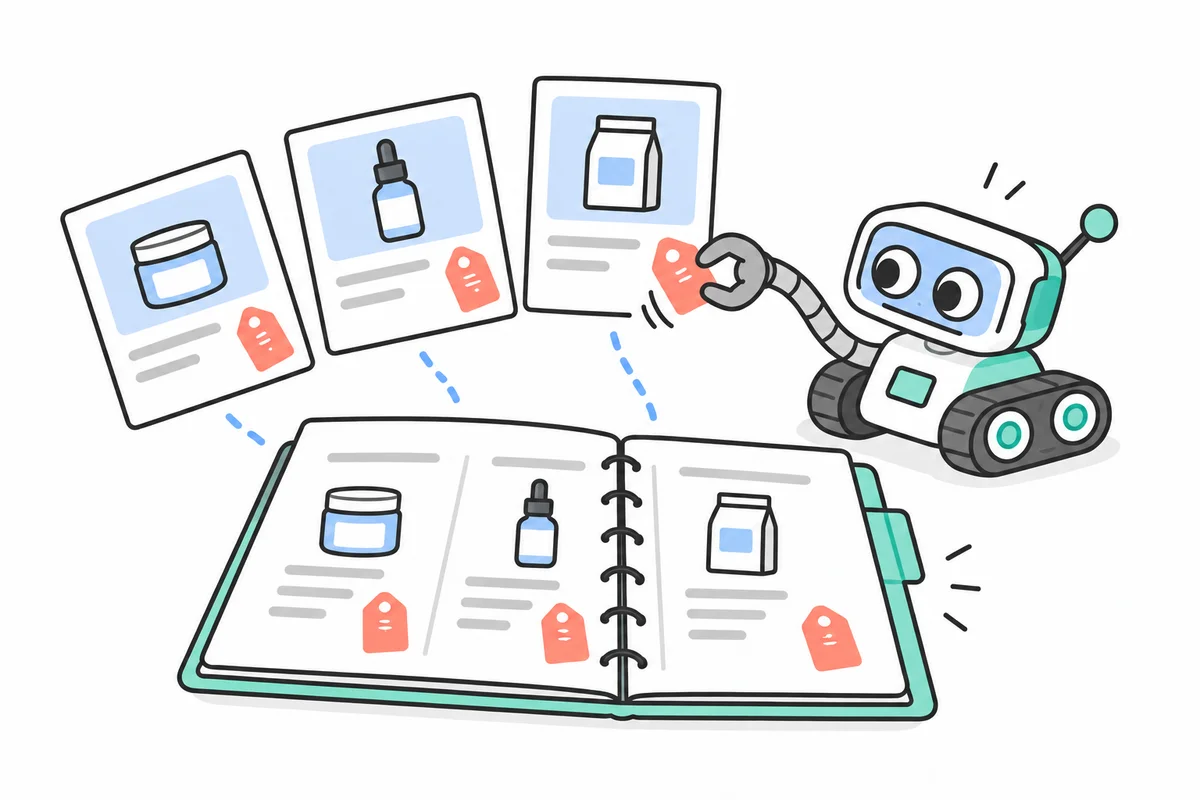
We built a pipeline that collected pricing and specials from logged-out Dutchie-powered storefronts, normalized the records, and refreshed them over time.
- Discovered and collected relevant public storefront data.
- Handled variations in menus, categories, and promotions.
- Standardized pricing and specials into a queryable schema.
- Refreshed the dataset as discounts and offers changed.
What changed
Comparable data for a more informed pricing discussion.
The feed gave the team a way to compare stores and promotions using a shared dataset. It supported competitive analysis without making someone manually check every storefront.
The technical decisions
Public storefront information.
The collection focused on information available to a logged-out visitor, including product prices and active specials. The challenge was organizing a fragmented dataset.
Normalize more than the price.
List prices, discounted prices, bundles, and category-based offers needed a consistent structure. Regular refreshes helped preserve a view of changes over time.