
The problem
One dental group can operate under several local practice names. Viewed separately, those practices can obscure the larger business behind them. A company name and a website only tell part of the story: DRAI needed more context on each group’s footprint, ownership, leadership, and public activity.
What we built
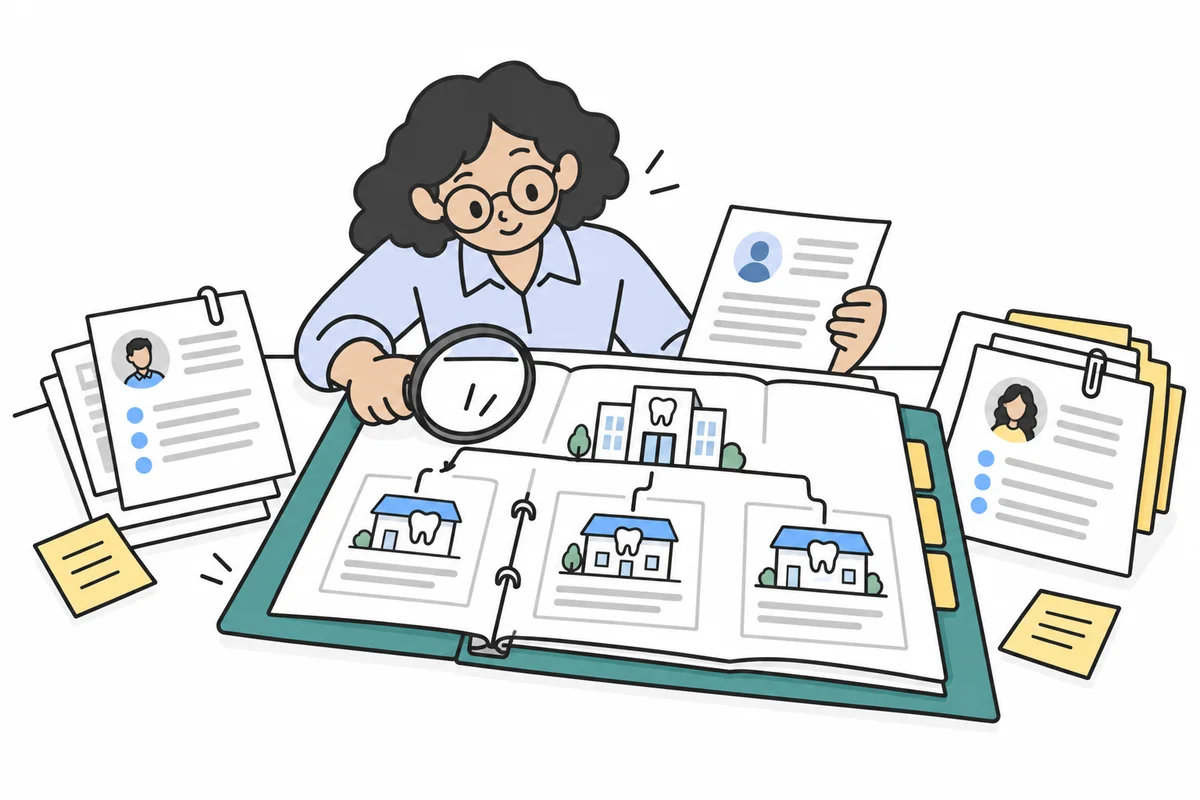
Using DentalAtlas, we brought scattered public information together into source-linked research on regional dental groups.
- Connected local practice brands and locations to the groups behind them.
- Used those relationships to build a clearer estimate of each group’s footprint.
- Brought together public ownership records, leadership profiles, hiring activity, and company announcements.
- Kept supporting sources alongside the research so DRAI could review the connections.
- Left questions open where the available evidence was inconclusive.

Finding regional groups behind local practice names. Illustrative research view.

Connecting the public record into a clearer group-level picture. Illustrative research view.
What changed
A clearer starting point for regional prospecting.
DRAI gained more context on regional groups that might otherwise fly under the radar. Connecting practice names with group-level information gave the team a more useful market picture, with supporting evidence they could review and open questions they could follow up on.
How we approached the research
Connect the practice to the larger business.
Local brands are a useful starting point, but they do not always show the full group. We brought practice locations and brand relationships together to help DRAI understand how individual practices fit into a broader footprint.
Keep the evidence with the findings.
Ownership records, leadership profiles, hiring activity, and announcements each added a different kind of context. Keeping those sources alongside the research made the connections reviewable and kept inconclusive evidence from becoming a definitive claim.